These guidelines are here to help you to manage your workload and communicate effectively within the company. Throughout every working day, Human Made generates a large amount of content across our Slack and P2s, as well as communication via video and voice calls.
You do not need to:
- keep up with absolutely everything in the company, just those things that are relevant to your role
- read scrollback for every Slack channel you are in, just stay up-to-date with your active projects
- respond to messages outside your working hours
- respond instantly to messages as they come in, or expect immediate responses to your messages. Communicating asynchronously does not mean communicating in real-time.
You should:
- use Slack statuses to tell your colleagues what your current status is (e.g. on holiday, afk, deep work)
- turn on email notifications for posts/comments on P2s that are relevant to you.
- turn on email notifications for posts/comments on Updates.
- if you’re deploying code, please be online and in Slack.
- conversations of importance should be had on a P2. If it’s already happened on Slack, write it up for a P2.
- let your squad know if you’re not going to be available during your normal working hours or if you are taking a holiday.
- keep your holiday information up-to-date so we are aware of your availability.
- if you come across documentation that is incorrect or out-of-date, take a few minutes to update.
- if you spend more than fifteen minutes with a configuration process, write it down and make it available to help others.
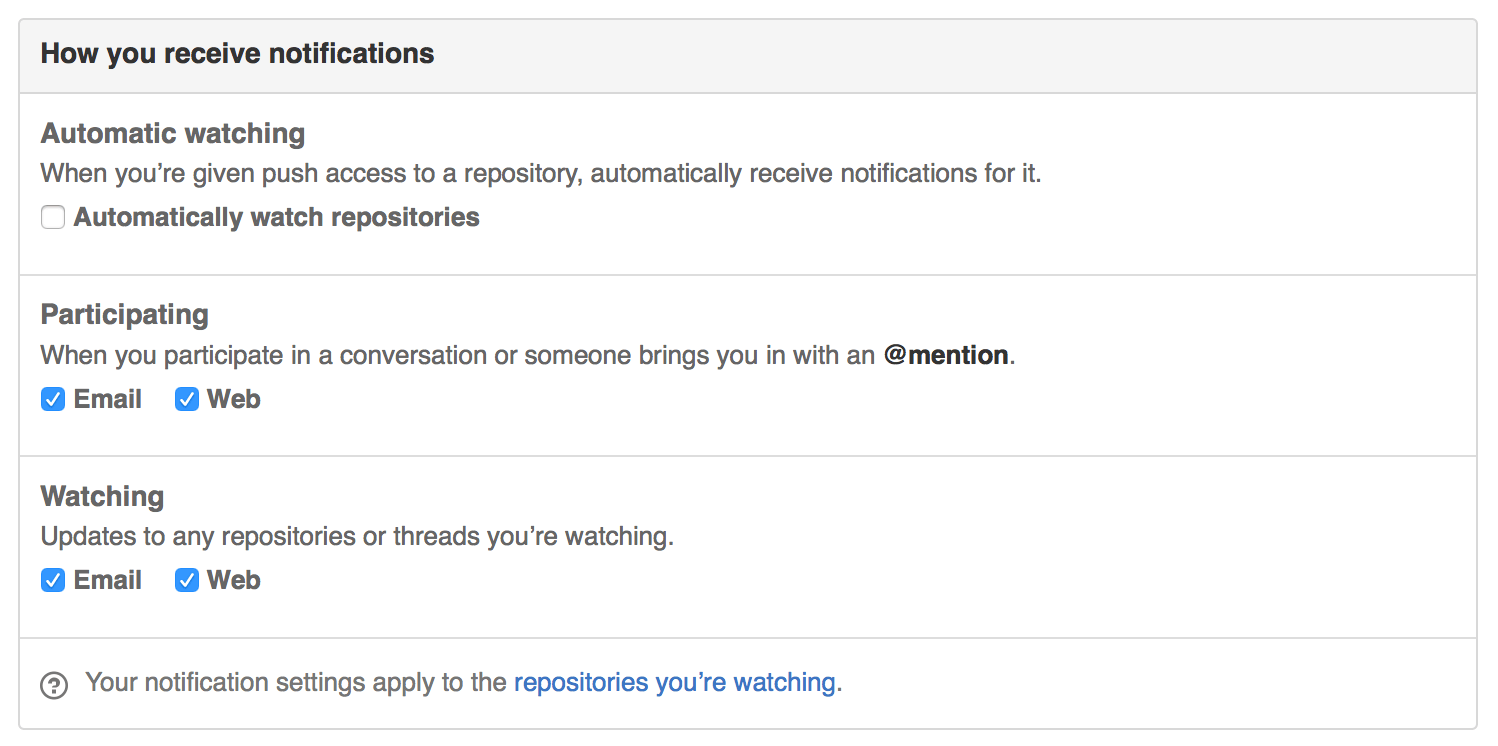
- on GitHub, only follow the repos you are interested in. You can turn off automatic repository watching in Github by going to Settings > Notifications.
- if you are travelling with other humans, please share your phone number and be available to them.
Communicating Across Timezones & Regions
HM works across EMEA, APAC, and the Americas, so most conversations happen with little or no overlap. That’s a feature of how we’re built, not a flaw to route around — but it means how we ask and answer matters more than it would in a single-office team.
Default to async. If a question, update, or decision doesn’t need a live conversation, don’t wait for one. Post it. The person on the other end may be asleep, and that’s fine — a well-written async message is often clearer than a rushed call anyway.
Ask in a way that can be answered without you. A good async question front-loads everything the other person needs to reply without pinging you back for context:
- What you actually need from them
- Why you need it (including any commercial or client stakes)
- The deadline, and what happens if it slips
- Who else is involved or already knows
- What you’ve already tried or ruled out
A question missing this context doesn’t get answered faster by being sent sooner — it just adds a round trip.
Expect “beats,” not instant replies. Across a full time zone spread, a 24–48 hour turnaround on a non-urgent async message is normal, not a delay. Plan client and internal timelines with that in mind, especially before assuming someone is ignoring you.
Use the right tool for the message:
- Slack — quick, transient, conversational. Not the record.
- H2 — the place for discussion, decisions, and updates that need to be findable later.
- GitHub — tasks and technical work.
- Docs — collaborative drafting.
Close the loop. If a decision gets made in Slack or on a call, someone writes it up on H2 (or GitHub) afterwards. If it isn’t written down, it didn’t happen for the next time zone.
Respect the hours you can’t see. Keep your calendar’s working hours accurate, decline or reschedule calls that fall outside someone’s day rather than defaulting to “make it work,” and record meetings so people don’t have to choose between sleep and being in the loop.
Handling DST and time conversion. Anchor recurring meetings to a timezone-aware calendar entry (not a fixed UTC offset) so they survive daylight saving changes, and use H2’s shortcode when posting specific times so readers see it converted to their own.
There is separate detailed guidance about when and how we expect you to use Slack and P2.